Equipment
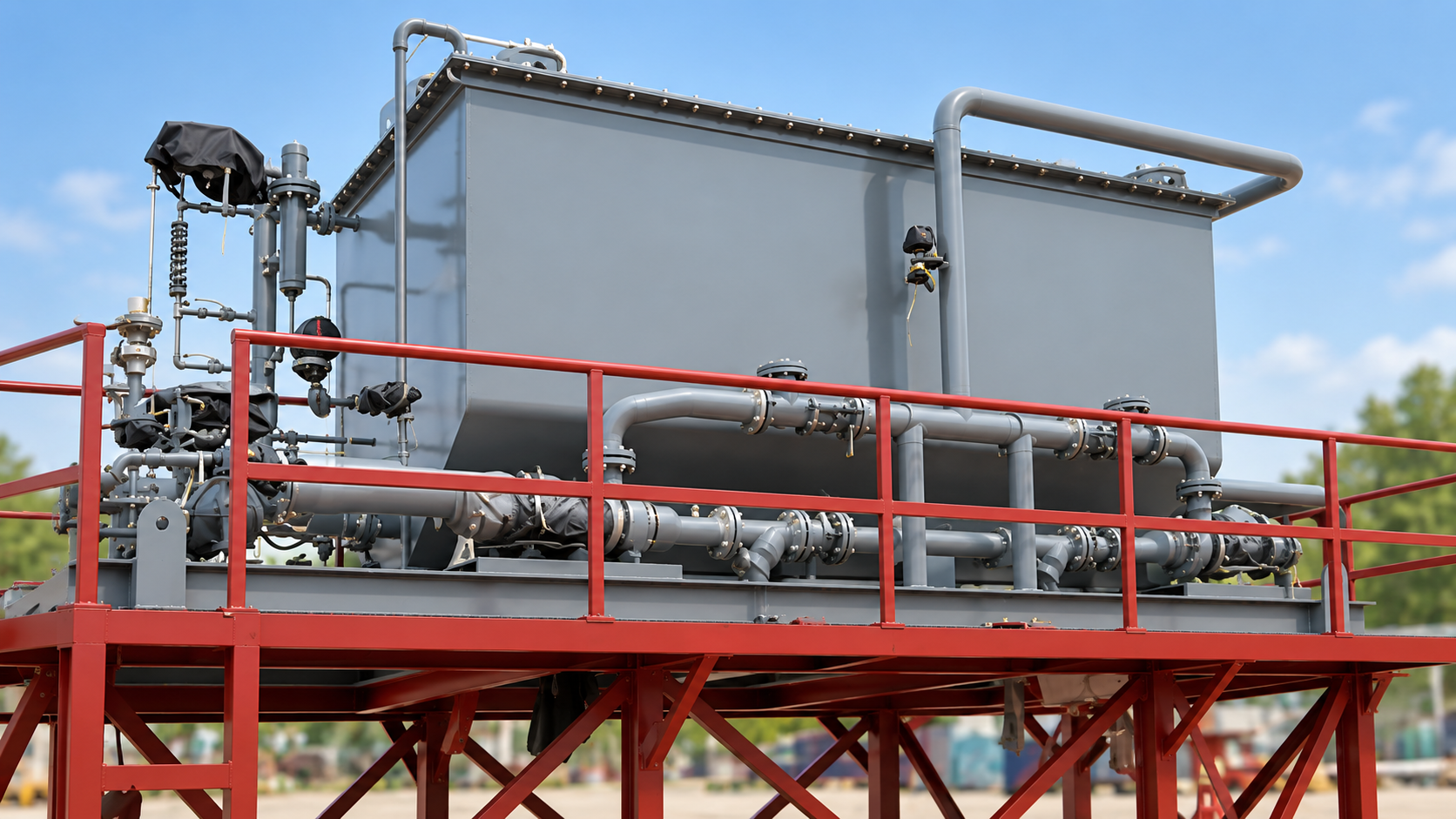
Corrugated plate interceptors (CPI) remove free oil from water by gravity, using inclined plate packs to shorten the distance each droplet has to rise. Where process pressure is too low to drive hydrocyclones, a CPI is an economical alternative.
Application
The CPI is selected in place of a hydrocyclone where there is insufficient process pressure to drive centrifugal separation.
Process
Inclined plate packing shortens the distance an oil droplet has to rise before it reaches a surface and coalesces, which is what allows a compact vessel to do the work of a much larger settling tank.
CPI systems can accommodate variations in inlet flow and free-oil loading when designed for the expected operating range.
System configuration
System configuration varies with process duty, operating conditions and project requirements.
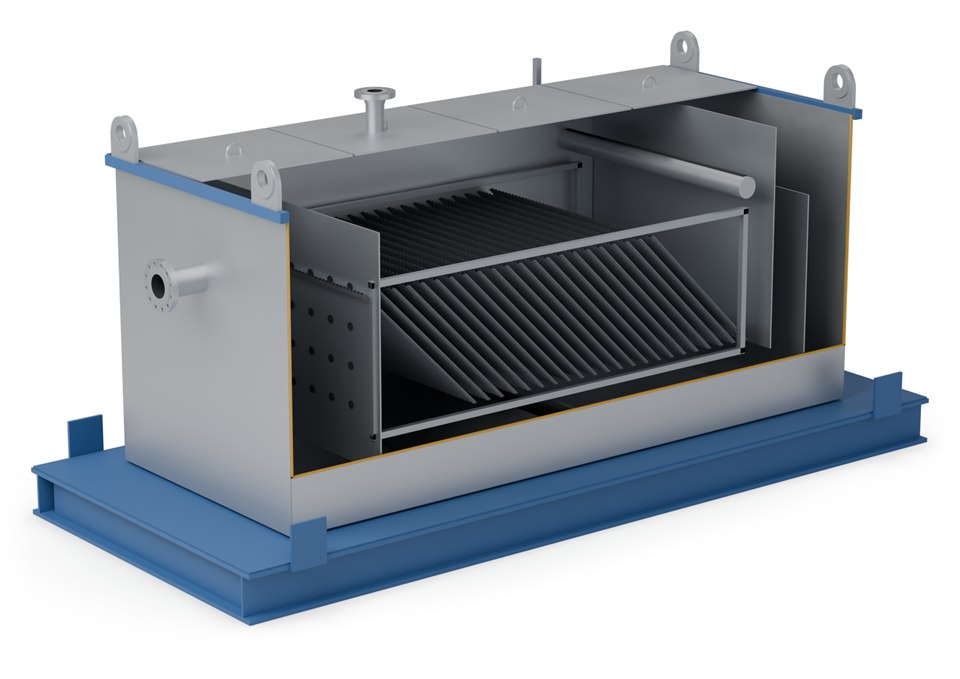
Slows the incoming water so that large oil droplets rise and slugs of oil or solids are collected.
Collects the coarse solids in the sump of the inlet chamber.
Inclined corrugated plates where oil droplets rise and coalesce and solids slide down; removable through manways.
Collects the separated oil for automated removal.
Remove the settled solids from the unit.
Protect the pressurised vessel and vent the released gas.
Materials
Final equipment arrangement and delivery format depend on process duty, transport constraints and site requirements.
Specifications
| Parameter | Value |
|---|---|
| Typical outlet quality | As low as 50 ppm oil in water, depending on inlet conditions |
| Standard | API standard |
| Sizes | A range of sizes depending on need |
| Moving parts | None |
| Surge handling | Accommodates variations in inlet flow and free-oil loading when designed for the expected operating range |
| Delivery | Skid-mounted units |
Plate pack area, vessel size and the achievable outlet concentration are set by SPEC engineering against your inlet water quality and flow rate. Performance for a specific project is confirmed in SPEC’s proposal.
Advantages
An economical alternative where hydrocyclones cannot be driven.
Can accommodate variations in inlet flow and free-oil loading when designed for the expected operating range.
No moving parts to service.
Related
The route where sufficient process pressure is available.
View →Flotation of dispersed oil and suspended solids.
View →Flotation using eductors to remove dispersed oil.
View →Process data

Enquiries
Send us your process data and operating conditions, and we will review the duty with you.
Contact Us